La lentitud lleva a la plenitud.
Vivimos en una época que valora la velocidad. Comemos deprisa, caminamos deprisa, respondemos deprisa y muchas veces pensamos deprisa. Sin embargo, algunas de las experiencias más valiosas de la vida parecen seguir otro ritmo. La amistad necesita tiempo. El amor necesita tiempo. El aprendizaje necesita tiempo. La contemplación necesita tiempo. También la belleza necesita tiempo.
Quizá por eso una comida preparada y compartida con atención puede producir una sensación de plenitud difícil de explicar. No se trata únicamente de alimentarnos. Se trata de estar presentes. Comer es una necesidad biológica, pero también puede ser una experiencia estética, cultural e incluso espiritual. La diferencia no suele estar en los ingredientes sino en la calidad de nuestra atención.
Durante años pensé en la comida principalmente como combustible. Comía para tener más energía para trabajar más. Amaba ver a mis estudiantes aprender y crecer, pero dar clase era para mí algo parecido a donar sangre: una experiencia profundamente gratificante y, al mismo tiempo, intensamente demandante. Mi atención estaba puesta en cómo obtener más energía para seguir dando.
Con el tiempo comprendí que no solo necesitaba energía. Necesitaba equilibrio. La vida parece sostenerse sobre un delicado balance entre lo que damos y lo que recibimos, entre la inspiración y la expiración, entre la actividad y el descanso. La comida dejó entonces de ser únicamente una cuestión de rendimiento para convertirse también en una práctica de cuidado.
Siempre me interesó la nutrición. Recuerdo que a los catorce años un profesor de biología nos habló de lípidos, grasas saturadas e insaturadas, hidratos de carbono y de cómo todo ello influía en el funcionamiento del cuerpo. Aquella conversación despertó una curiosidad que me ha acompañado durante décadas. Durante mucho tiempo mis lecturas estuvieron orientadas principalmente hacia la salud y la apariencia física. Con los años empecé a interesarme por otra dimensión de la alimentación: su capacidad para aportar bienestar, presencia y placer.
La naturaleza parece ofrecernos una pista a través de los colores. Los distintos tonos de frutas y verduras suelen reflejar diferentes compuestos beneficiosos para el organismo. Pero más allá de su valor nutricional, el color tiene otra función igualmente importante: nos invita a detenernos. Cuando algo es bello, queremos contemplarlo. Cuando una comida es bella, queremos saborearla. La belleza introduce una pausa entre el acto automático de comer y la experiencia consciente de alimentarnos.
El filósofo Roger Scruton defendía que la belleza no es un lujo reservado para los museos o las grandes obras de arte, sino una necesidad humana profunda. Cuando prestamos atención a la belleza de las cosas cotidianas, nuestra experiencia del mundo se transforma. Una mesa sencilla puesta con cuidado, una taza agradable entre las manos o una fruta cortada con esmero pueden contener una belleza discreta capaz de enriquecer la vida diaria.
Algo parecido observó el escritor japonés Junichiro Tanizaki en El elogio de la sombra. Para él, la experiencia de las cosas dependía tanto del contexto como del objeto mismo. La luz, la textura, el silencio y la atmósfera formaban parte inseparable de la belleza. La comida no era solamente lo que se servía en el plato, sino también el recipiente que la contenía, la luz que la iluminaba y la actitud con la que era recibida.
Durante gran parte de la historia humana, la comida estuvo rodeada de pequeños rituales. La mesa se preparaba con cuidado, los alimentos se compartían, la conversación acompañaba el acto de comer y el tiempo parecía discurrir con otro ritmo. Hoy muchas comidas ocurren frente a una pantalla, de pie, en el coche o entre tareas pendientes. Hemos ganado velocidad, pero quizá hemos perdido algo de profundidad.
No existen recetas universales. Cada persona acaba descubriendo aquello que le sienta bien y aquello que le ayuda a vivir con más equilibrio. Sin embargo, la belleza en el plato me parece una de las pocas constantes. Me ayuda comer a horas parecidas, evitar comer entre horas cuando no existe hambre real, compartir la mesa cuando es posible y disfrutar de mi propia compañía cuando no lo es. También me ayuda detenerme antes de sentirme completamente llena, dejando espacio para la ligereza y el bienestar.
Con el tiempo también he encontrado inspiración en investigaciones sobre medicina integrativa y en libros como Eat to Beat Disease, que exploran el potencial de determinados alimentos para favorecer la salud a largo plazo. El aceite de oliva virgen extra, el té verde, los arándanos, las nueces o algunas variedades de patata rica en pigmentos son ejemplos interesantes. No los considero fórmulas mágicas ni soluciones milagrosas, sino pequeñas herramientas dentro de una forma más consciente de relacionarnos con nuestro cuerpo.
Quizá la alimentación saludable no consista únicamente en contar calorías, proteínas o vitaminas. Quizá también tenga que ver con la calidad de nuestra relación con la comida. Con la atención que prestamos al acto de comer. Con la gratitud hacia aquello que nos nutre. Con la capacidad de transformar una necesidad cotidiana en un pequeño ritual.
Tal vez la belleza no transforme lo que comemos, pero sí transforma nuestra relación con ello. Y cuando prestamos atención a algo tan cotidiano como una comida, empezamos a sospechar que la belleza nunca estuvo reservada para las grandes ocasiones. Siempre estuvo allí, esperando en los gestos más sencillos de la vida.
La lentitud no añade más horas al día, pero puede añadir más vida a cada hora. Quizá esa sea una de las lecciones más sencillas y más olvidadas de nuestro tiempo: que la plenitud no suele encontrarse al final de la prisa, sino en la atención con la que habitamos cada momento.
Mini ritual antes de comer
- Siéntate y mira el plato 10 segundos en silencio.
- Nombra tres colores.
- Respira tres veces profundamente.
- Agradece una cosa concreta de ese día.
- Toma el primer bocado sin móvil ni pantalla.
- Mastica despacio y escucha si tu cuerpo quiere más o menos.
- Cuando notes que estás cerca del 80%, para y respira de nuevo.
Dos recetas sencillas de mi mesa
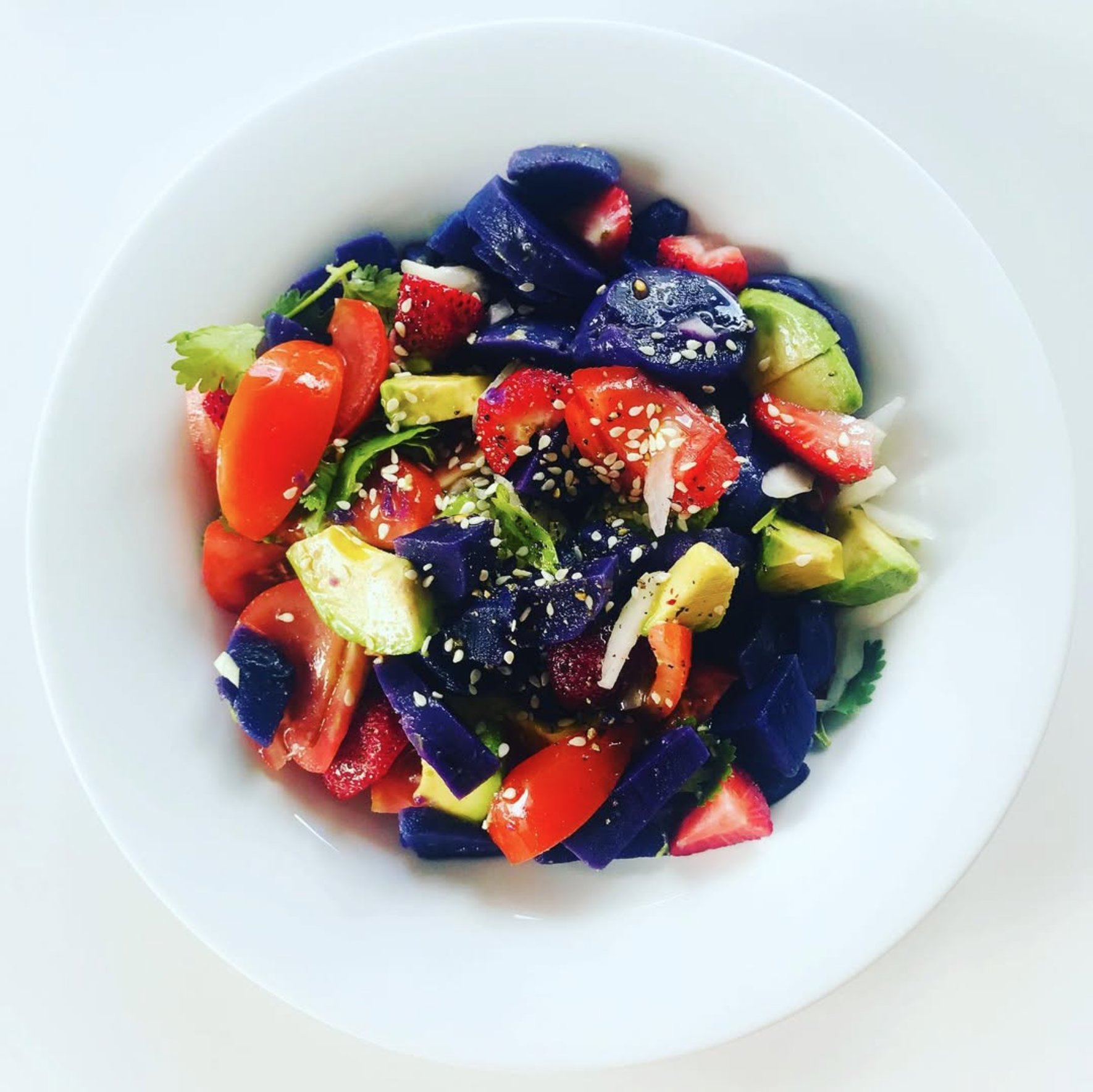
Purple potato salad
- Patata morada, aguacate, tomate.
- Hemp seeds, fresas, perejil.
- Una pizca de cebolleta.
- Aceite de oliva y sal.
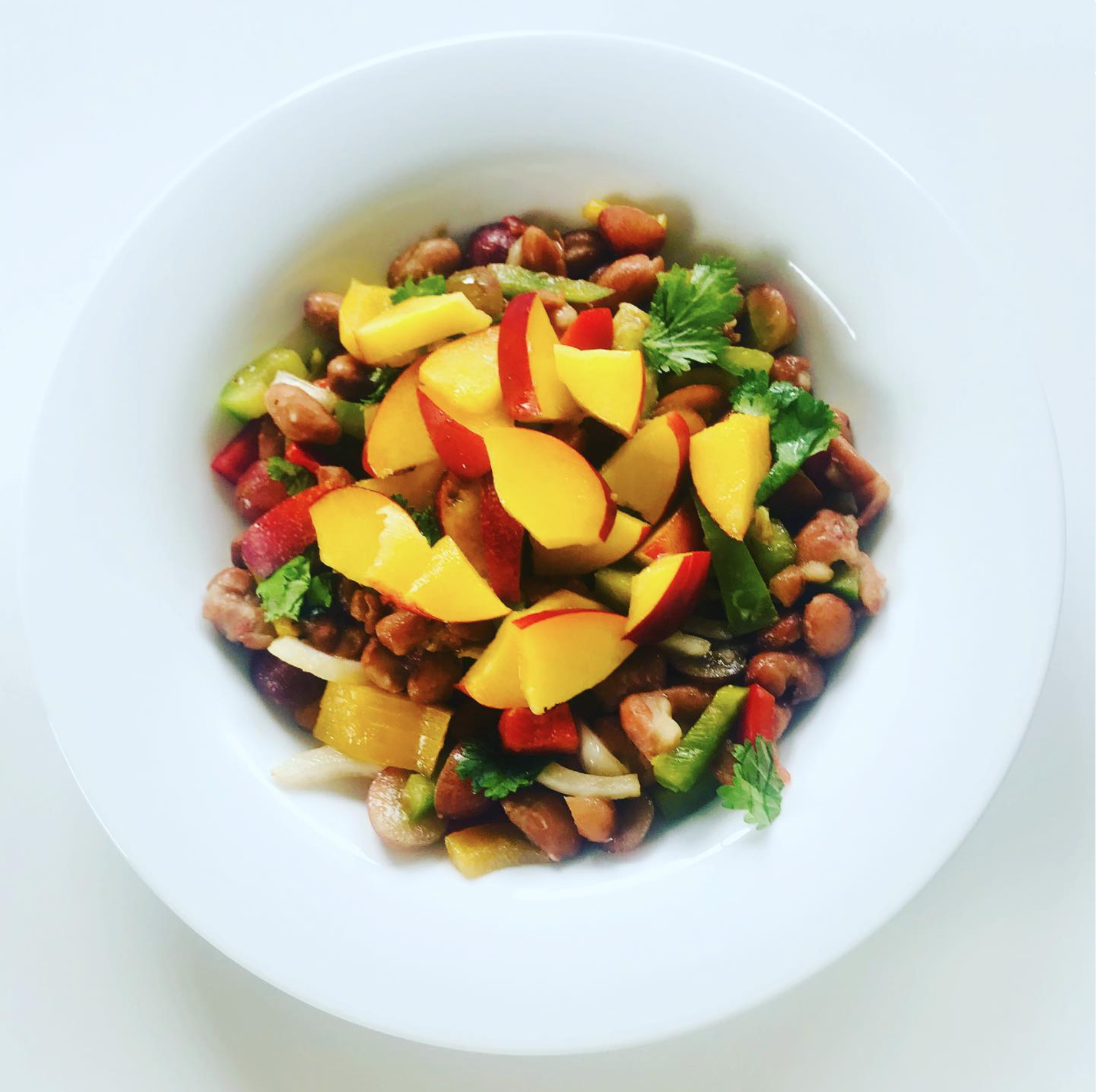
Alubias con Fruta
- Alubias, uvas, perejil, nectarina.
- Pimientos rojo, amarillo y verde, cebolla.
- Aceite de oliva, vinagre de Módena.
- Una pizca de sal y mucho amor :)
La mesa es un altar pequeño donde podemos recordar, una y otra vez, que merecemos belleza.
"La lentitud lleva a la plenitud."
Marta · Alegría de VivirSi quieres conversar, te escucho y te recomiendo un libro para tu momento vital.
Si te interesa el Club Alegría de Vivir, puedes apuntarte aquí y te aviso cuando abra.